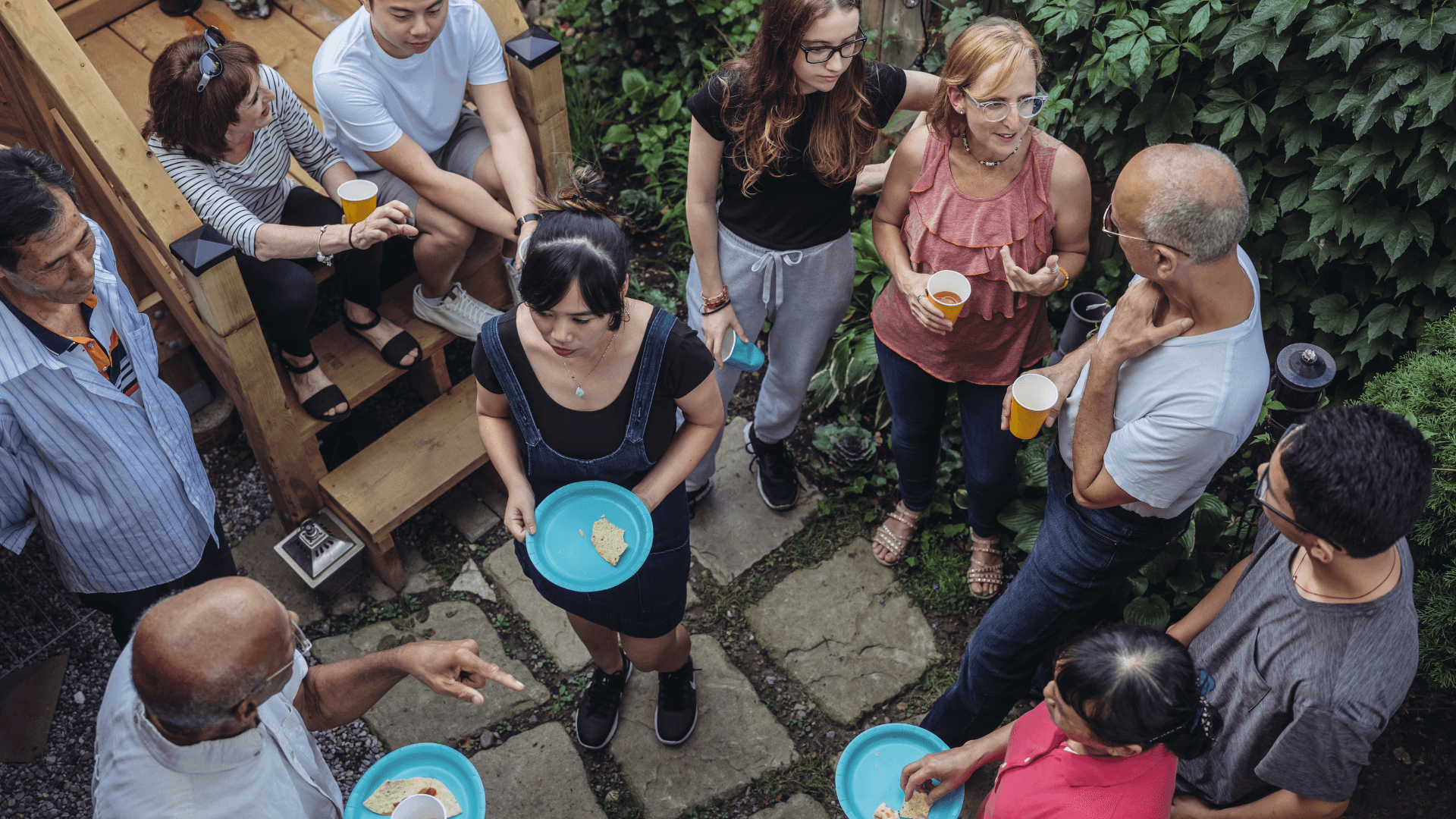
The strange reality of modern life
Right now, you probably know the rough details of several strangers' lives — their relationship dramas, their opinions, their last major holiday. You've watched people you haven't met in years move through milestones, crises, and arguments in real time.
And the person who lives twenty metres away? You might not know their name.
This isn't a personal failing. It's the logical outcome of a world designed to monetise your attention online and leave your front doorstep empty. But it's worth naming, because the cost is getting higher. Sociologists call this the loss of the third place.
The world is asking more of our neighbourhoods
In July 2025, Canadian environmentalist David Suzuki made headlines when he told reporters something he'd never said publicly before. Governments, he concluded, had failed to take the steps needed to prevent the worst of climate change — and the fight now had to shift. "Focus on the local community," he said. "Get them to be as self-sufficient and self-reliant as you can possibly be."
Suzuki argues that community resilience will be key as extreme weather events intensify and the gaps in official preparedness become impossible to ignore.
He's right. Floods, wildfires, heatwaves, and power outages don't pause while systems figure out how to respond. The people who get through them are the ones who already know which neighbour has a generator, who needs help evacuating, whose kids need watching, and who has spare hands.
That knowledge doesn't exist unless the community has already been built.
Minneapolis showed us what's possible
In late 2025, residents of Minneapolis came together, block by block, to support and protect their neighbours — monitoring threats, sharing information, and coordinating care for people too afraid to leave their homes. The networks that made it possible didn't materialise overnight. Researchers tracking the movement traced them back to mutual aid networks built during the COVID pandemic and in the wake of George Floyd's murder — moments when neighbours were forced to talk to each other, to develop the connections that would prove so vital years later.
Strong communities aren't built in a crisis. They're built before one — and then they hold when it matters.
You don't have to like everyone to show up for them
Here's something worth saying clearly: community isn't about friendship. You don't have to get along with your neighbours, share their values, or enjoy their company to benefit from knowing them — and to have them benefit from knowing you.
Community is infrastructure. It's the person who grabs your mail when you're away. The group chat that warns you about the burst water main before you drive into it. The neighbour who has a key to your place in case something goes wrong.
You maintain that infrastructure not because everyone on your street is delightful, but because it serves everyone — including you.
And then something interesting tends to happen. The act of showing up for someone, of being relied on and relying in return, creates the conditions for real friendship. The deepest connections don't begin with chemistry. They begin with shared experience, consistent presence, and the small proof that someone will actually show up.
What a neighbourhood group on Gather actually looks like
A block on Gather is a group chat, a resource board, and a community action hub rolled into one.
It's the thread where someone posts that they have a surplus of courgettes and three people collect them the same day. The task where volunteers sign up for the quarterly rubbish clean-up and twenty names appear by morning. The request that goes out for a babysitter on Friday and gets answered before lunch. The post from the new family asking if anyone knows a good plumber — and six recommendations coming back within the hour.
It's also the emergency contact list. The neighbour who flags that someone's elderly parent hasn't been seen in a few days. The group that mobilises when a flood warning comes through at 2am.
Gather has everything a neighbourhood group needs: group messaging, task management, action assignment, event coordination, shared resources, and a recognition system that makes quiet contributions visible. It's built by a small team in Aotearoa New Zealand, it's a not-for-profit alternative to Meta, and it costs nothing.
There's no ads, no outside influence, no billionaire's agenda. Just your street, organised. Whether your neighbourhood wants to start a climate club or a babysitting co-op, Gather has the tools.
Someone on your street is waiting for this to exist.
Start a neighbourhood group today. Free, simple, not-for-profit.